
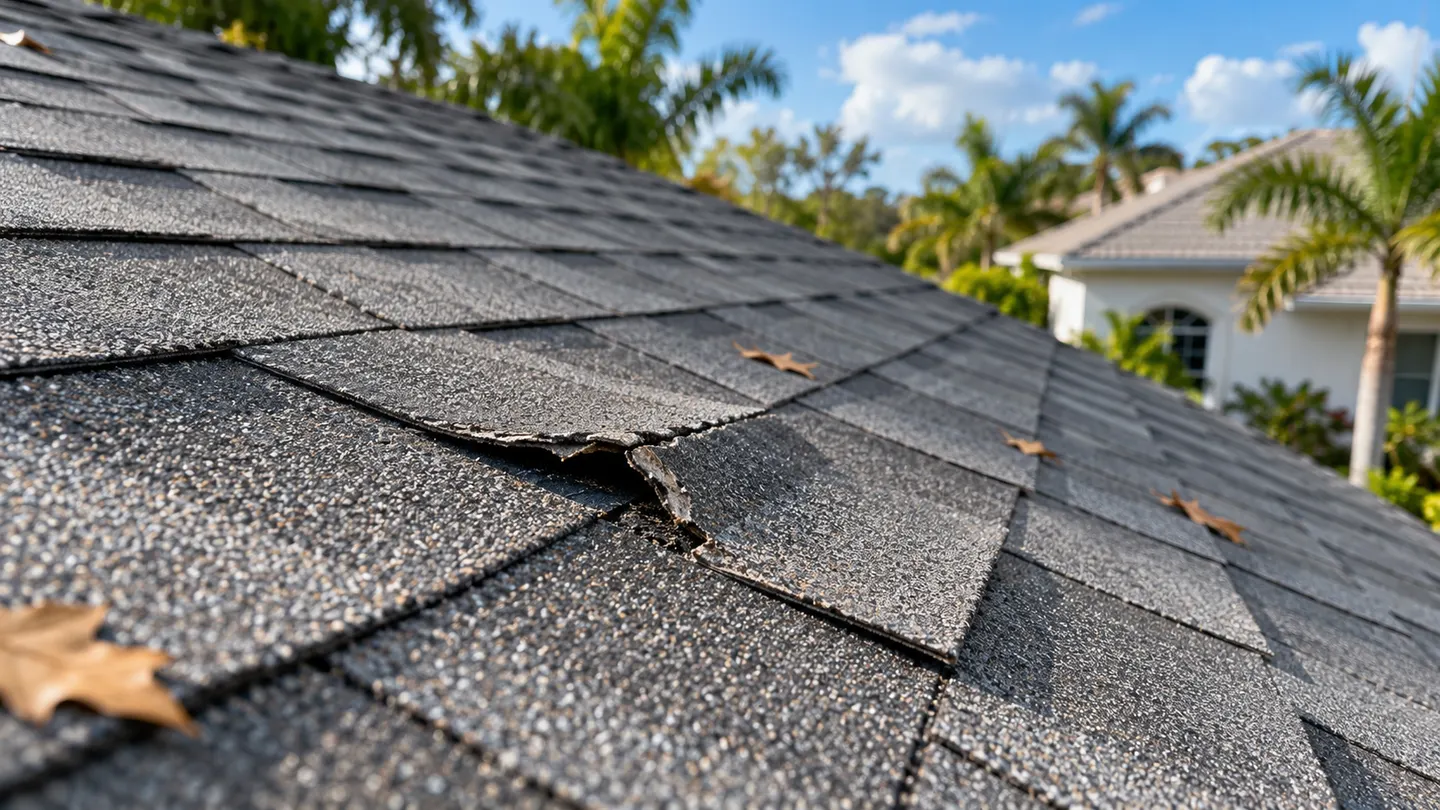
Illustrative image of roof damage; not a photograph of a property damaged by Hurricane Isaias.
Yes, a roof inspection after Hurricane Isaias can make sense even if your ceilings are dry, especially if your property experienced strong winds, falling branches, or visible changes to the roof. A roof can have damaged components without an active interior leak. Whether yours needs repairs depends on what an inspection finds.
A dry ceiling is reassuring. It tells you that you haven’t observed water coming through that ceiling. It doesn’t tell you whether the ridge cap, flashing, or roof covering came through the storm in the same condition.
For Central Florida homeowners considering an inspection after Isaias in 2026, start with what happened at your property. The storm’s name alone isn’t a reason to replace a roof, and its regional track doesn’t establish the condition of your house.
Why roof damage doesn’t always produce an immediate leak
Your roof is an assembly. The shingles, tiles, or metal panels work with underlayment, flashing, and other components to manage water. A damaged outer component may not immediately produce a visible stain indoors.
A shingle might be torn while the layer underneath remains in place. Flashing around a penetration may be disturbed without admitting water during every rain. Water that does enter the assembly may not show up at the ceiling immediately.
That is why waiting for a leak can leave a repair need undiscovered. It also doesn’t mean every loose shingle or cracked tile is hurricane damage. Age, installation problems, previous repairs, and other causes have to be considered.
The Florida Division of Emergency Management’s shingle roof guidance identifies roof penetrations and the condition of the roof covering as inspection concerns. Those details deserve attention even when the broad roof surface looks intact from the driveway.
What signs make an inspection worth scheduling?
From a safe location on the ground, look for changes such as:
- Shingles, ridge-cap pieces, tile fragments, or metal roofing components in the yard.
- Roof edges or sections that appear displaced compared with their pre-storm condition.
- Branch impacts or debris remaining on the roof.
- Bent or displaced metal around roof edges, vents, or other visible details.
- New ceiling discoloration, peeling finishes, or a damp smell indoors.
These observations tell you where to investigate. They don’t establish the repair scope or the cause on their own. Even loose roofing material in your yard could have come from another property.
Stay off a storm-affected roof and leave ladder access to a qualified professional. If you see sagging, major impact damage, or an electrical hazard, keep clear of the affected area and arrange appropriate help.
If there were no meaningful storm effects at your property and no changed conditions, there may be no reason for an urgent storm inspection. An older roof that hasn’t been checked in years may still benefit from a routine condition assessment.
What should a post-hurricane roof inspection include?
An inspection should give you a documented explanation of the roof’s condition and any limitations on what could be evaluated.
For a shingle roof, that means looking at the roof covering and details such as hips, ridges, valleys, flashing, and penetrations. A tile or metal roof needs an assessment appropriate to that system. Where water entry is suspected, accessible interior or attic conditions may help connect an exterior finding to the reported problem.
Ask for photographs that show both the overall location and the close-up condition. A close-up of one damaged shingle is more useful when you can tell where it sits on the roof and how it relates to surrounding areas.
Some areas may not be safely accessible. Some components are concealed. The report should identify those limits rather than imply that everything was examined. Further investigation may be needed before someone can confidently define the repair.
A good explanation should also address cause. “There is a cracked tile” is an observation. “This tile was cracked by Isaias” requires supporting facts. The same care applies to shingle creases, loose flashing, and other conditions found after a storm.
Does finding damage mean you need a new roof?
Sometimes a localized repair is reasonable. Sometimes the damage is broader, or the existing material cannot be repaired reliably. The decision depends on the extent and location of the damage, the condition of the surrounding roof, material availability, installation requirements, and applicable code requirements.
Ask the contractor to explain why the proposed scope is necessary. If the recommendation is replacement, what makes repair unsuitable? If the recommendation is a small repair, how will it address the affected components and connect with the existing roof?
Before authorizing work, get a written scope that identifies the materials and tasks included. If concealed conditions may change the price, the contract should explain how those changes will be documented and handled.
Common questions about roof inspections after Isaias
Can wind damage a roof without causing a leak?
Yes. Wind can damage or displace roof components before water becomes visible indoors. An inspection helps determine whether that occurred and what work, if any, is needed.
Can I tell from the ground whether my roof is damaged?
You may see missing materials or obvious displacement, but a ground-level view cannot establish the condition of every roof surface and detail. It is a useful first look, with limits.
Will an inspection tell me whether insurance will pay?
A contractor can document observed conditions and recommend repairs. Insurance payment depends on the cause, policy coverage, deductible, and claim evaluation. A repair recommendation is not a coverage determination.
Should I wait until the next heavy rain?
If you have evidence of damage, arrange an assessment rather than using another storm as a test. If there are no warning signs, the timing can be based on the roof’s age, condition, and actual storm exposure.
Get a clear picture of your roof’s condition
If you’re in Orlando, Winter Park, Maitland, or the surrounding Central Florida area and noticed changes after Isaias, contact Orange Contracting & Roofing to discuss a roof inspection. Tell us what you observed and whether any temporary work has already been done. We’ll help you understand the condition of the roof and the next practical step.