
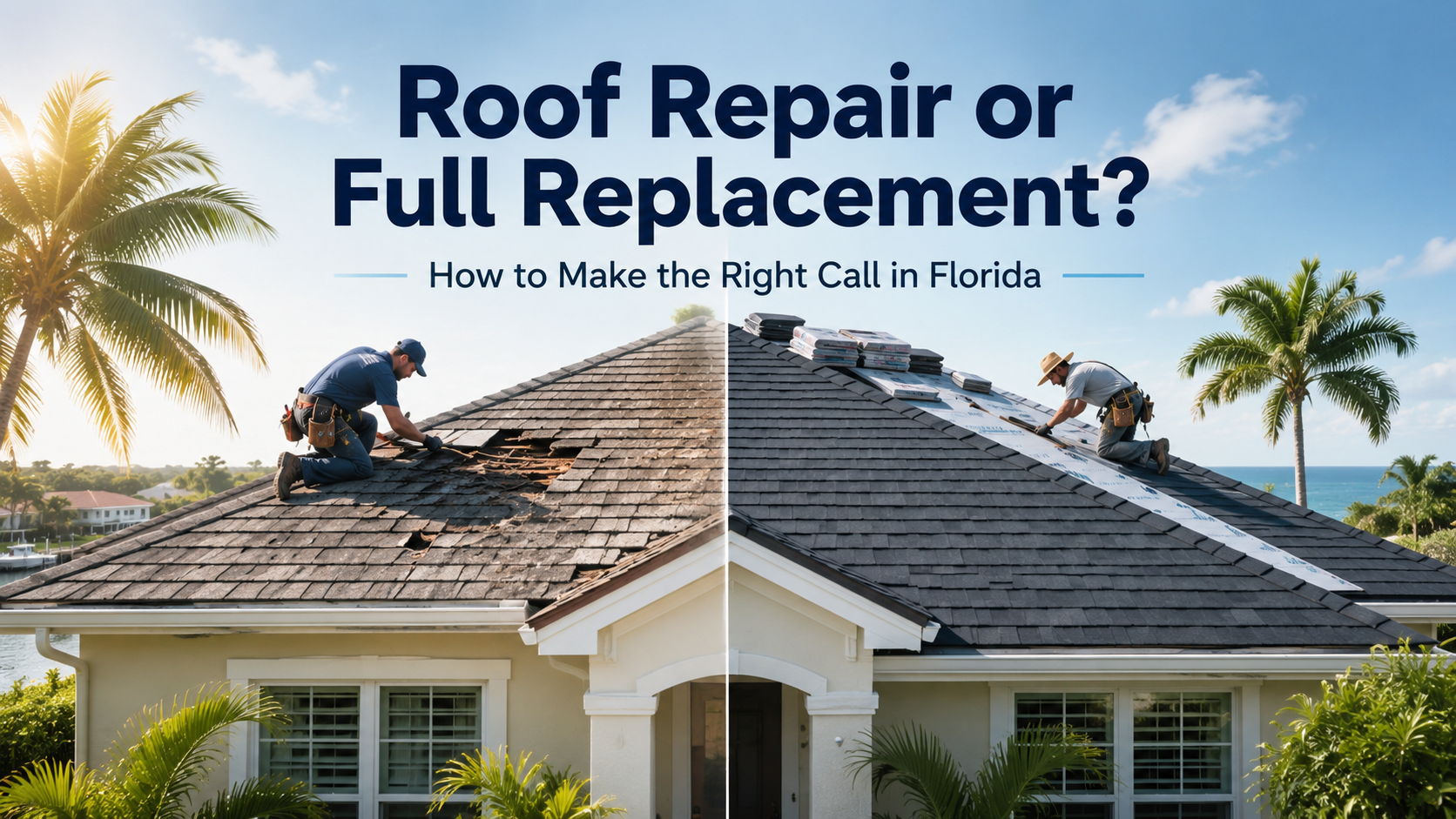
A roof leak does not automatically mean you need a new roof. At the same time, a repair that looks inexpensive today can become costly if it only postpones an unavoidable replacement—or if it fails to address the real source of the problem.
For Central Florida homeowners, the right decision depends on more than the size of the visible damage. The roof’s age, material, overall condition, repair history, remaining service life and the location of the failure all matter. A professional assessment through a contractor that provides both roof inspections and roofing services can help distinguish a repairable defect from a broader roofing-system failure.
The goal is not to repair every roof that can be repaired or replace every roof that has a problem. It is to choose the option that provides a durable, sensible solution for the home.
When a Roof Repair Usually Makes Sense
A repair may be the right choice when the problem is isolated and the rest of the roofing system remains in serviceable condition.
Common examples include:
- A small number of damaged or missing shingles
- A cracked or displaced roof tile with compatible replacement material available
- A failed pipe boot or plumbing vent flashing
- A localized flashing problem near a wall, chimney or roof transition
- A leak traced to one identifiable installation defect
- Minor storm damage confined to a limited area
- A relatively young roof with no pattern of recurring leaks
The key word is localized. A proper repair should address the cause of the problem—not simply cover the visible symptom with sealant.
For example, water appearing near a plumbing vent may be caused by a deteriorated boot that can be replaced without disturbing the rest of the roof. But if the surrounding shingles are brittle, the decking is deteriorated or earlier repairs have failed repeatedly, the affected area may be larger than it first appears.
When Full Roof Replacement May Be the Better Investment
Replacement becomes more reasonable when the roof is failing as a system rather than at one isolated location.
Signs that may point toward replacement include:
- Leaks occurring in multiple or unrelated areas
- Widespread shingle cracking, curling, granule loss or loss of adhesion
- Numerous broken, slipped or previously repaired tiles
- Deteriorated underlayment beneath an otherwise intact tile roof
- Soft, damaged or deteriorated roof decking in several locations
- Repeated repairs that have not stopped water intrusion
- Materials that are brittle or cannot be repaired without causing additional damage
- Discontinued products that cannot be matched or integrated reliably
- A roof that is already approaching the end of its expected service life
A roof can also look acceptable from the ground while important components beneath the surface are deteriorating. Tile roofs are a good example: concrete or clay tiles may remain visually attractive long after the underlayment and flashings beneath them begin to fail. To understand why those concealed layers matter, read our guide to synthetic, peel-and-stick and felt roof underlayment in Florida.
The Six Factors That Should Drive the Decision
1. The Roof’s Age and Remaining Useful Life
Age matters, but it should not be used by itself to condemn a roof. Florida homeowners concerned about renewal or replacement demands should also review how Florida’s 15-year roof rule actually works.
Two roofs installed in the same year can age very differently. Workmanship, ventilation, tree coverage, sun exposure, maintenance, storm history and material quality all affect performance. Central Florida’s heat, humidity, heavy rain and severe thunderstorms can accelerate deterioration, especially where installation details were weak from the beginning. The Insurance Institute for Business & Home Safety provides additional information about how aging, everyday weather, wind and hail affect roofing systems.
A modest repair on a roof with substantial remaining life may be an easy decision. Spending thousands of dollars to repair a roof that will likely need replacement soon deserves more scrutiny.
2. Whether the Damage Is Truly Isolated
The water stain inside the house is not always directly below the roof failure. Water can enter at a flashing, valley or roof penetration and travel along the decking or framing before becoming visible indoors.
That is why diagnosing a roof from the ceiling stain alone is unreliable. A useful inspection should evaluate the roof surface, penetrations, flashings, transitions and—when accessible—the attic or underside of the roof deck.
3. The Condition of the Surrounding Materials
Even when the damaged area is small, the materials around it must be workable.
Asphalt shingles can become brittle and crack when lifted to complete a repair. Tile can break as surrounding pieces are removed and reset. Older metal panels, fasteners and sealants may no longer integrate well with new components.
A repair that cannot be completed without damaging adjacent materials may expand in scope or may not provide a dependable result.
4. Repair History
One well-executed repair is not necessarily concerning. A collection of patches, exposed sealant and repeated service calls is different.
If the same area continues to leak, either the original source was not identified or the repair method was not durable. If new leaks are developing across different portions of the roof, the system may be reaching the point where continued repairs no longer make financial sense.
Homeowners should ask for an explanation of why the roof is leaking and how the proposed repair corrects that condition.
5. Repair Cost Compared With Replacement Value
The lowest immediate cost is not always the lowest long-term cost.
Suppose a substantial repair would cost several thousand dollars, but the roof is near the end of its useful life and replacement is likely within a few years. That repair may still make sense if the homeowner needs time to budget or is addressing a truly isolated condition—but the tradeoff should be understood before the work begins.
Compare:
- The cost and expected life of the repair
- The likelihood of additional repairs elsewhere
- The roof’s remaining useful life
- Whether the repair includes a meaningful workmanship warranty
- Whether replacement could improve wind resistance, water protection or insurability
- Any financing or property-sale considerations
The useful comparison is not simply repair price versus replacement price. It is cost per year of reliable service and the risk of paying for the same problem twice. If replacement is one of the realistic options, our guide to Florida roof costs and the Orange instant-estimate tool can help establish a preliminary budget.
6. Your Plans for the Property
Your timeline matters.
A homeowner planning to remain in the house for many years may place more value on a complete replacement and a new warranty. Someone preparing to sell may need to consider the roof’s effect on inspections, buyer financing and homeowners insurance. A homeowner with an immediate leak but limited funds may need a safe repair now and a replacement plan later. Homeowners comparing replacement systems may also find our metal-roof-versus-shingle-roof cost comparison useful.
There is no responsible one-size-fits-all answer. The recommendation should account for both the roof and the homeowner’s actual objective.
Repair, Maintenance and Temporary Patching Are Not the Same
These terms are often used interchangeably, but they should not be.
Maintenance addresses routine conditions before they become active failures, such as clearing debris or correcting minor sealant deterioration where sealant is an appropriate component of the system.
A repair corrects an identified defect using materials and methods intended to provide a durable result.
A temporary patch or tarp is intended to reduce additional water entry until permanent work can be completed. It should not be presented as a lasting repair.
Heavy applications of roofing cement or caulk can sometimes slow a leak, but they can also conceal the original problem and make future work more difficult. A permanent solution normally requires correcting the failed flashing, roof covering, penetration or transition—not simply coating it.
What About Storm or Insurance-Related Damage?
If the condition may be related to wind, hail, a fallen object or another sudden event, document the property before permanent repairs alter the evidence. Take photographs, preserve invoices and keep records of any emergency measures taken to protect the home. Our storm-damage and restoration process explains how Orange documents damage, develops the repair scope and guides the project through completion.
Do not delay reasonable steps needed to prevent additional damage. Temporary protection and permanent repairs, however, are different decisions. Before choosing a scope of work, make sure the roof has been inspected and the cause and extent of the damage are reasonably understood.
Coverage depends on the individual policy and facts of the loss. A contractor can document observed conditions and prepare a construction scope, but homeowners should direct policy and coverage questions to their insurer or an appropriately licensed insurance professional. For current disaster-preparation guidance, IBHS recommends that homeowners schedule professional roof inspections and complete needed repairs before storms arrive.
Code and Permitting Can Affect the Available Scope
Roof repairs and replacements must comply with the building code and permitting requirements that apply to the property. The type of roofing system, extent of work, existing construction and local jurisdiction can all affect what is required. Because code provisions change, homeowners should avoid relying on an old rule of thumb or a percentage repeated online as the sole basis for deciding whether the roof can be repaired.
A licensed roofing contractor should evaluate the proposed work against the current requirements and confirm whether a permit is necessary. The Florida Building Commission publishes the Florida Building Code and related official resources.
Questions to Ask Before Approving a Roof Repair
Before signing a repair proposal, ask:
- What is the specific source of the problem?
- Is the damage isolated, or are similar conditions present elsewhere?
- Will surrounding materials tolerate the repair process?
- Are compatible replacement materials available?
- What components will be removed and replaced?
- Is this a permanent repair or temporary measure?
- What workmanship warranty applies?
- What happens if concealed damage is discovered?
- How much useful life is reasonably left in the rest of the roof?
- At what point would replacement provide better value?
A contractor should be able to explain the recommendation in plain language and show you the conditions supporting it.
Start With an Honest Roof Assessment
Sometimes the best recommendation is a focused repair. Sometimes replacement is the more responsible investment. The answer should come from the roof’s actual condition—not from pressure to sell the largest project possible or a promise that a quick patch will solve every problem.
Orange Contracting and Roofing evaluates the visible condition of the roof, the likely source of water intrusion, the repairability of surrounding materials and the roof’s remaining service life. We then explain the available options so you can make an informed decision.
If you are dealing with a leak, storm damage or an aging roof in Central Florida, schedule a free, no-obligation inspection with Orange Contracting and Roofing. If you already believe replacement may be necessary, you can also get a preliminary instant roof estimate using satellite measurements.
Call 407-205-2676 or request an inspection online.
Orange Contracting and Roofing is locally owned and operated in Maitland, Florida, and serves homeowners throughout Central Florida. Florida Certified Roofing Contractor CCC1337502 and Certified Residential Contractor CRC1336049.