
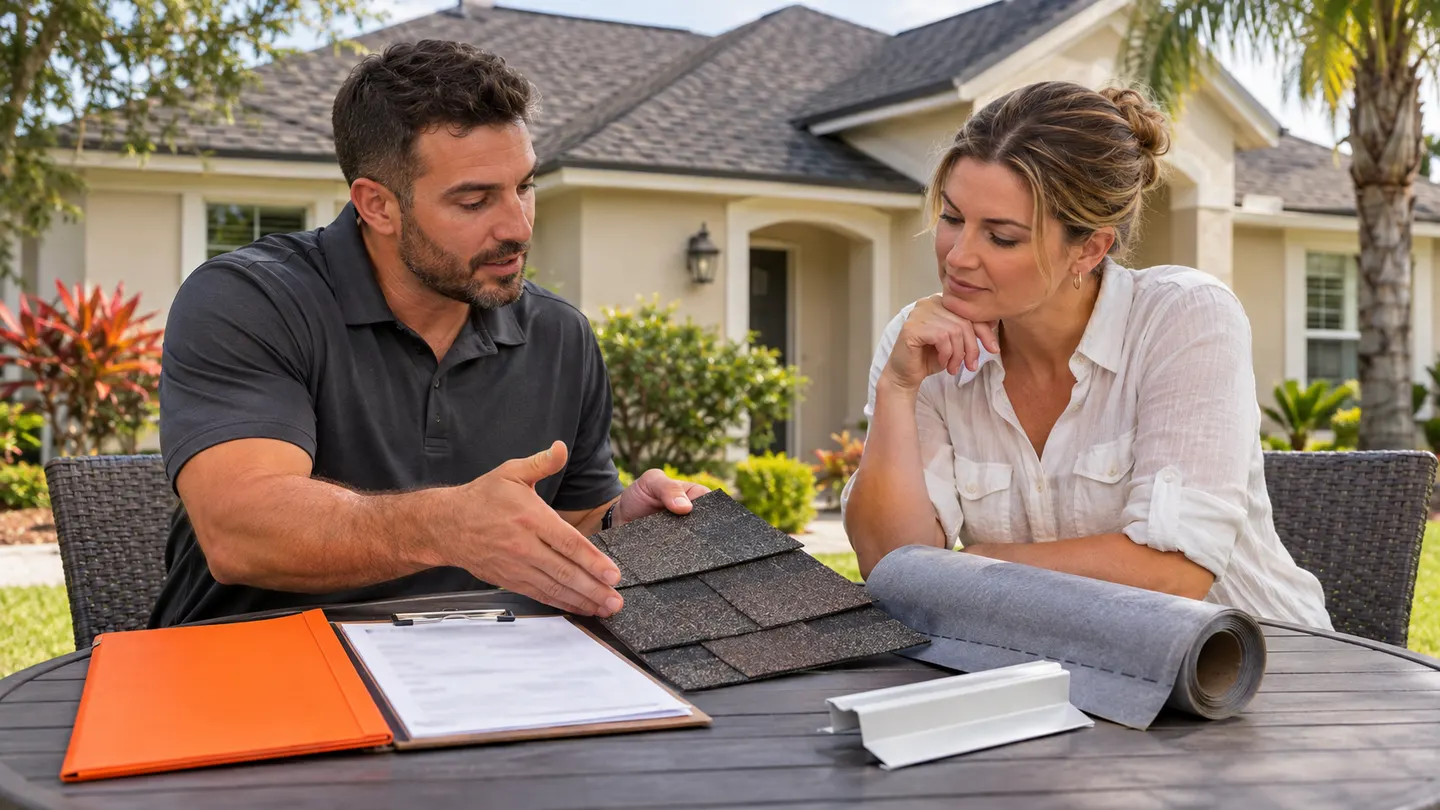
Two roof replacement estimates can name the same shingle and still describe very different jobs. One may include replacing flashing, a defined allowance for damaged decking, and permit fees. The other may leave those items for later.
Before comparing prices, check what each contractor has agreed to do and what can change the amount you owe. Get those answers in writing before the old roof comes off.
Identify the materials beyond the shingle
The roof covering is usually the easiest part of the proposal to recognize. Homeowners compare the manufacturer, product line, and color because those are the choices they can see.
The written scope should identify the underlayment and explain the proposed work at roof edges, valleys, walls, and penetrations. Ask what is included for pipe flashings, vents, and other accessories. If the proposal says “complete roofing system,” ask the contractor to spell out what that means for your house.
For an upgrade, ask which product changes, whether the installation scope changes with it, and how it affects warranty eligibility. Confirm who handles any required warranty registration.
These details help you compare the actual package instead of assuming two proposals include the same components.
If your contractor presents the offer through BidGroove, our affiliated contractor proposal software, check the selected package and upgrades against the written scope. Read the exclusions and payment terms before accepting the proposal.
Make the flashing scope explicit
Flashing handles transitions where the roof meets another surface or an opening. A proposal should explain which existing flashings will be replaced, which may remain, and how their condition will be evaluated.
A chimney, wall connection, or skylight can require a different discussion from an ordinary pipe penetration. Ask whether the proposed work includes the surrounding repair needed to complete that transition. If siding, stucco, or another finish may need to be disturbed, find out who is responsible for putting it back.
If the contractor plans to reuse flashing, ask why its condition and compatibility make that reasonable. Resolve that question before removal begins.
Our roof replacement service starts with evaluating the roof assembly and developing a scope for the property. The written proposal should reflect that evaluation.
Agree on concealed damage pricing before tear-off
A contractor cannot see every part of the roof deck while the existing covering is in place. The estimate should explain how concealed damage will be priced if it turns up.
Ask what the base price includes and how additional decking work will be measured. If the estimate includes an allowance, confirm the quantity and material. For work beyond that allowance, ask for a unit price and an explanation of what it covers.
A per-sheet price is hard to compare if one contractor includes removal, disposal, installation, and labor while another charges some of those separately. Different deck materials or structural repairs may also require different pricing.
Find out how concealed conditions will be photographed and how additional work will be authorized. The agreement should explain the process for necessary work that cannot wait while the roof is exposed.
Check the work around the installation
Permits, disposal, deliveries, and cleanup all affect the project. They deserve a place in the written agreement even though they do not become part of the finished roof.
Confirm who obtains the required permit and whether its cost is included. Ask how inspection requirements will be handled and what closeout information you will receive. Our project process explains the stages to discuss before work begins.
Discuss where the dumpster and materials will go, whether vehicles need to be moved, and how landscaping and nearby equipment will be protected. If gutters, screens, solar equipment, or other attachments affect access, identify the work and responsibility before scheduling.
For contractor verification, use Florida DBPR’s license-checking guidance. Check that the license information corresponds to the company named in your agreement.
Read the payment and warranty terms with the scope
The proposal or accompanying contract should explain the deposit, progress payments, and final payment trigger. Ask how approved extra work is billed and which documents mark completion.
Read the workmanship warranty separately from the manufacturer’s material warranty. Confirm who handles a reported leak, what each warranty covers, and which exclusions or maintenance requirements apply.
Before signing, you should be able to answer five questions:
-
What materials and installation work am I buying?
-
Which existing components will remain?
-
What is excluded?
-
How will additional work be priced and approved?
-
When are payments due, and what warranties will I receive?
Once those answers are clear, the price comparison becomes more useful. You may still choose the lower estimate, but you will know what it includes.
For a roof replacement proposal in Maitland, Orlando, or the surrounding Central Florida area, contact Orange Contracting & Roofing at 407-205-2676.